Time Travel

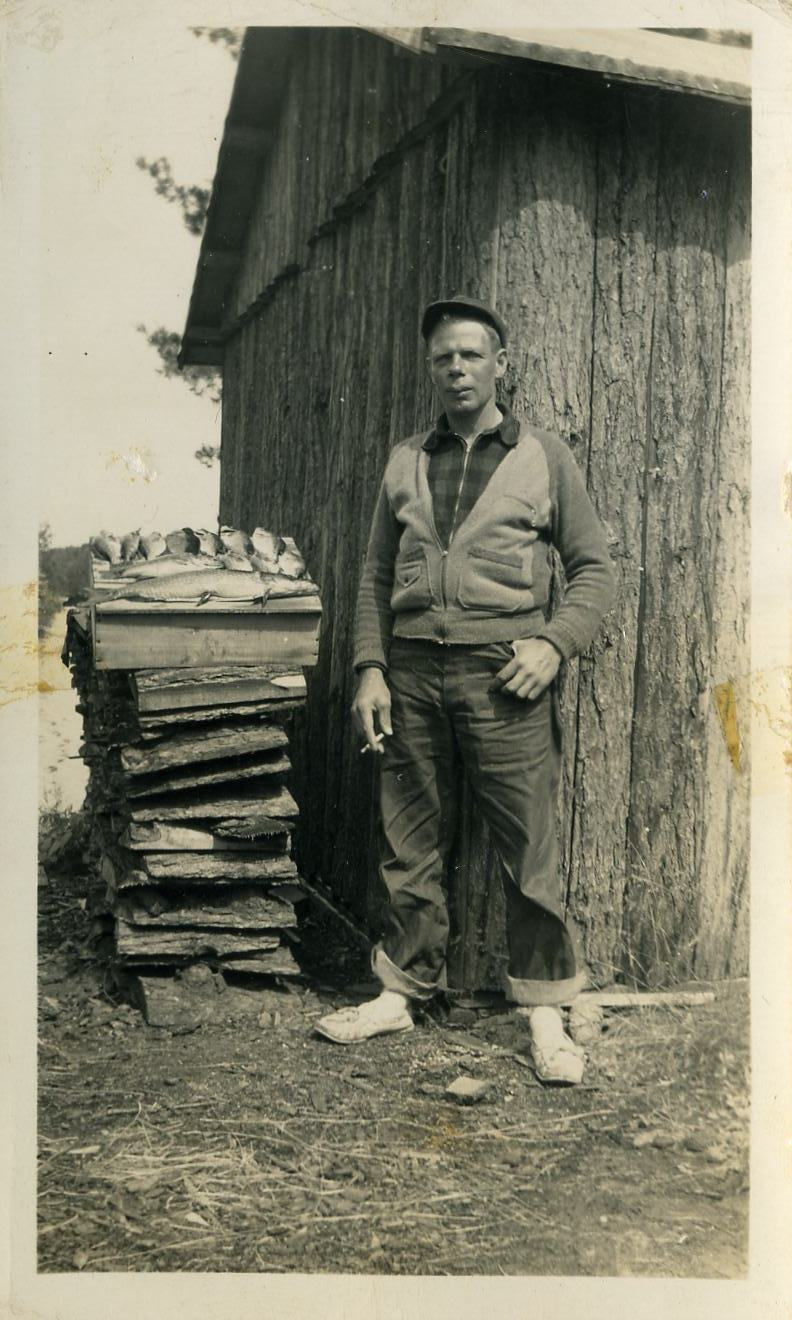
If you could go back in time, where would you go? And if you could make that journey, would you be an observer or a participant? A plaza in Dallas in 1963 or a London rooftop concert in 1968 have always interested me. These are a couple of enduring moments that appeal to the imagination of an aging Boomer. But most likely, I’d choose a rustic cabin on a backwater cove along the Wisconsin River circa 1940. I’d want to sit in a wooden row boat with my grandfather, fishing and talking about his life in the 1920s and 30s. I was a young child when he passed away so all I have is a few scant memories, pictures, and some stories that could use some serious ground truthing.
My first introduction to time travel probably came from history lessons delivered in the early 1960s by the esteemed Mr. Peabody and his side-kick Sherman. Traveling in the Wayback Machine, Mr. Peabody dropped in on various historical figures to assist them in solving their unique problems, each story concluding with a moral pun. At about the same time, the idea of gizmo-assisted time travel was stirred further by the movie The Time Machine from the classic story written in 1895 by H.G. Wells where I learned about the Eloi, Morlocks and became infatuated with Weena, but I digress.
Captivated by the idea of moving backward or forward through the ages, I was disappointed when adults told me no such technology existed, yet my fascination was revived when I learned machines maybe were not required after all.
A Connecticut Yankee in King Arthur's Court, the 1889 historical novel by Mark Twain demonstrated how a thump on the head could be an effective means of time travel. However, if I have to sing and dance as Bing Crosby did in the 1949 musical version of this story, history and human-kind would be better served if I just not, plus, I don’t want to be pigeon-holed to the 5th century.
The 1966 TV show The Time Tunnel re-established my imagination of time machine theory when project Tic-Toc taught us the past and the future are the same and returning, if desired, could be a problem. They never brought the show to a conclusion. To the best of my knowledge Tony and Doug are still out there somewhere proving that most time-travel gadgets and the people operating them are simply too unreliable.
But it was the 1970 Jack Finney novel, Time and Again, where I learned the true means by which one can travel back in time. In this story, travel is achieved without cumbersome machines or gadgets. Instead, the traveler merely immerses himself into a carefully detailed arrangement of period surroundings and employs a simple form of self-hypnosis. A useful fantasy to which I still cling. Someday I may fully test the theory to its logical conclusion, a one-way ticket if you will. But for now, I’m content assembling a vision and feeling of what it must’ve been like long ago on another day, in another time using available parts and pieces. Step into an old wooden duck boat with a dozen Mason decoys, maybe a Winchester Model 12 shotgun and a backdrop out of view of the 21st century and I’m betting I can almost get there, except for those pesky contrails.
However, the idea of stepping through a gateway of sorts still appeals to my imagination. Occasionally, I look at laser imaging, detection, and ranging technology (aka LiDar) for signs of possible portal sites, but so far no luck. I’m thinking there must be a collection of mounds or maybe stones like Craigh na Dun but even if I found something, my faint Scottish genes and lack of gemstones would probably render my travel desires ineffective, plus I would still have the problem of precise location and timeline placement;1743 Scotland is not the outcome I seek.
A few years ago while trout fishing a river in northern Wisconsin on a cool June evening I’m quite sure I discovered a traveler’s doorway. Just upstream from a place known as Squaw Bend I detected the aroma of pipe tobacco in the air and could hear some nattering between a couple fishermen. As I approached the shadowy figures standing in the river, they looked my way and then quickly stepped out of view. By the time I waded upstream to their location I discovered the archway and a fly patch floating in the river, a Yellow Sally and a couple chewed-up Harvey Alft’s Nonpareils snagged deep into the fleece. I was a little surprised but should’ve known Gordon MacQuarrie and Al Peck would find a way through the space-time continuum in order to drift a fly in front of a brown trout on one of their favorite rivers.
When I returned to the Namekagon River a couple of years later prepared for direct exploration, the portal was gone. This year I may have to attend the annual MacQuarrie Pilgrimage to continue my research. I’m hoping members of the Old Duck Hunters Association Circle may reveal the answers I seek while dancing around the sacred pine-knot campfire.
Albert Einstein and Stephen Hawking agree that backward travel is likely impossible, but they tended to over-think things. Hawking did famously invite time travelers to a party at the University of Cambridge, announcing the invitation the day after the party. Apparently no one attended, but I think maybe his design was flawed. Original invitations not only needed to survive throughout the ages, but also be found by a traveler. What are the odds of that happening? Besides, I think time travel requires great intent and purpose, travelers are not just floating about looking for a party to attend.

Looking to improve on the Hawking experiment, I’m currently studying thru-lines, timelines and calendars to perhaps throw a party of my own. Probably a cast and blast somewhere near the Brule River. Invitees will include Grandpa, Gordon MacQuarrie and Aldo Leopold, if his schedule will allow. I wonder, would catching brook trout or shooting pa’tridge in 1940 be a violation of the Temporal Prime Directive? In the meantime, “Drizzle, drazzle, drozzle, drone, it’s time for this one to come home."


Comments